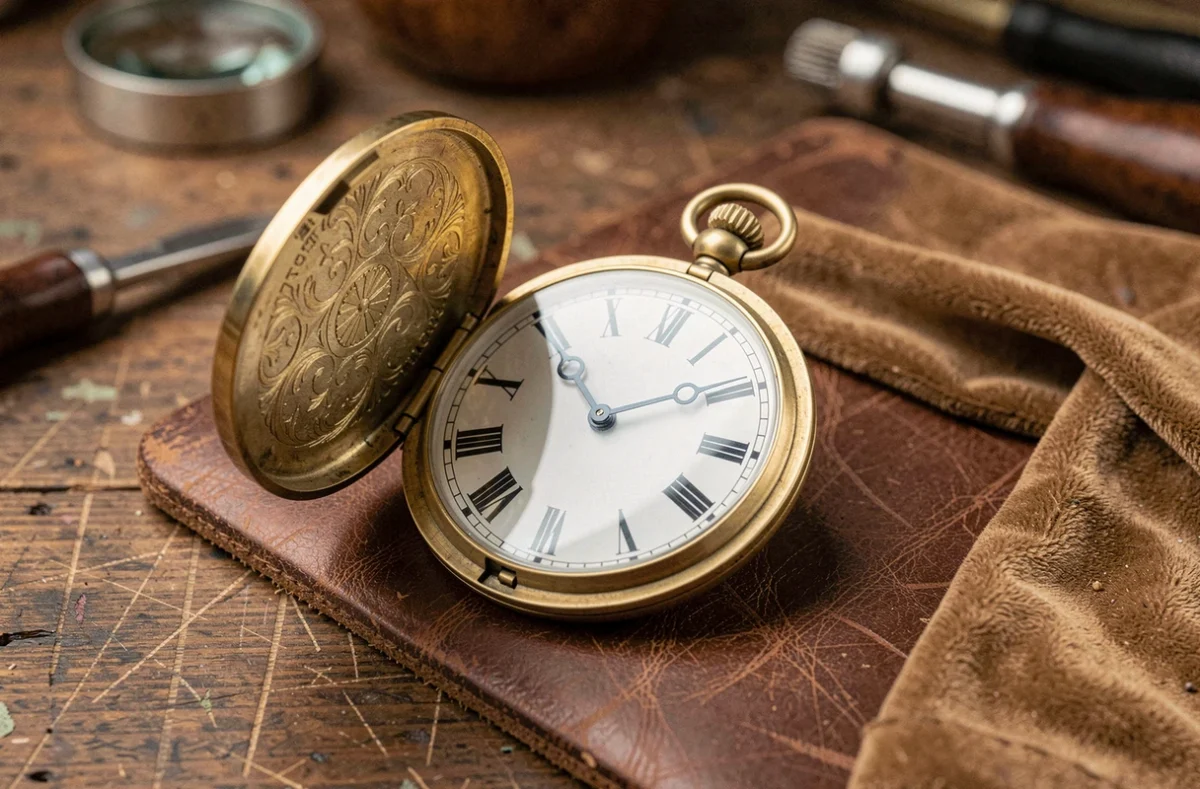
Pocket watches share a common point with vinyl records and manual razors: their resurgence relies on a perceived quality gap with modern alternatives. Comparing a mechanical pocket watch to a smart watch is akin to measuring two radically different relationships with time.
This article examines what concretely distinguishes the types of pocket watches, what their maintenance truly costs, and the pitfalls to avoid when making a vintage purchase.
Mechanical or quartz movement: technical differences in a pocket watch
| Criterion | Mechanical movement (manual winding) | Quartz movement |
|---|---|---|
| Power source | Manually wound mainspring | Button cell battery |
| Daily accuracy | Several seconds deviation per day | Less than one second deviation per day |
| Maintenance | Watchmaker service every few years | Battery replacement |
| Potential lifespan | Several generations if maintained | Limited by the obsolescence of electronic components |
| Collector interest | High (complications, finishes) | Low except for signed models |
The mechanical movement remains the heart of the horological appeal of the pocket watch. Its operation relies on a set of gears, escapements, and balances visible to the naked eye on open-faced models. This mechanical transparency partly explains the fascination these pieces exert.
Quartz, on the other hand, offers superior accuracy at a significantly lower entry price. For everyday use without horological pretensions, it is a pragmatic choice. In the collector’s market, a quartz case has almost no resale value.
Enthusiasts looking to explore mechanical models and their matching chains can find specialized selections like the Gousset Avenue on Modenmarie.com, which brings together various styles of pocket watches with their accessories.

Hunter case, demi-hunter, or open-face: which type of pocket watch to choose
The choice of case determines both the aesthetics and the durability of the watch. Three configurations have dominated the market since the 19th century, each catering to a distinct use.
- The hunter case protects the dial with a spring-loaded metal cover. Originally designed for riders and military personnel, it remains the most shock- and dust-resistant.
- The demi-hunter case adds a glass porthole at the center of the cover, allowing the time to be read without opening the flap. It is a compromise between protection and practicality.
- The open-face case leaves the dial exposed under a simple glass. Thinner, it easily slips into a waistcoat pocket. This is the most common format for vintage models.
For a purchase intended for regular wear, the demi-hunter offers the best balance. For a collector’s piece displayed in a case, the open-face showcases the craftsmanship of the dial and hands more effectively.
Vintage pocket watch: the pitfalls of a purchase without verification
Acquiring an antique pocket watch without prior examination exposes buyers to several disappointments that online sellers do not always mention.
Replaced parts and dial authenticity
Restoration advice for antique watches recommends preserving the original dial and its signs of age rather than systematically repainting them. A repainted dial or hands that do not conform to the model can halve the value of a piece. Requesting a history of interventions is as relevant as checking the proper functioning of the movement.
Water resistance and aging seals
A specialized restoration workshop warns that the seals of an antique watch age and lose their function. Even on a pocket watch (less exposed to water than a wristwatch), ambient humidity is enough to oxidize a movement. Having a watchmaker check the water resistance before regular wear can prevent disproportionate repair costs.
Unavailable spare parts
Restoring an antique watch often faces the challenge of a lack of original parts. A specialized French workshop describes several possible solutions, from reuse to remanufacturing, but a repair does not necessarily imply a return to original condition. Before purchasing, checking the availability of components for the targeted caliber allows for estimating the true cost of ownership.
Pocket watch chain: a style accessory in its own right
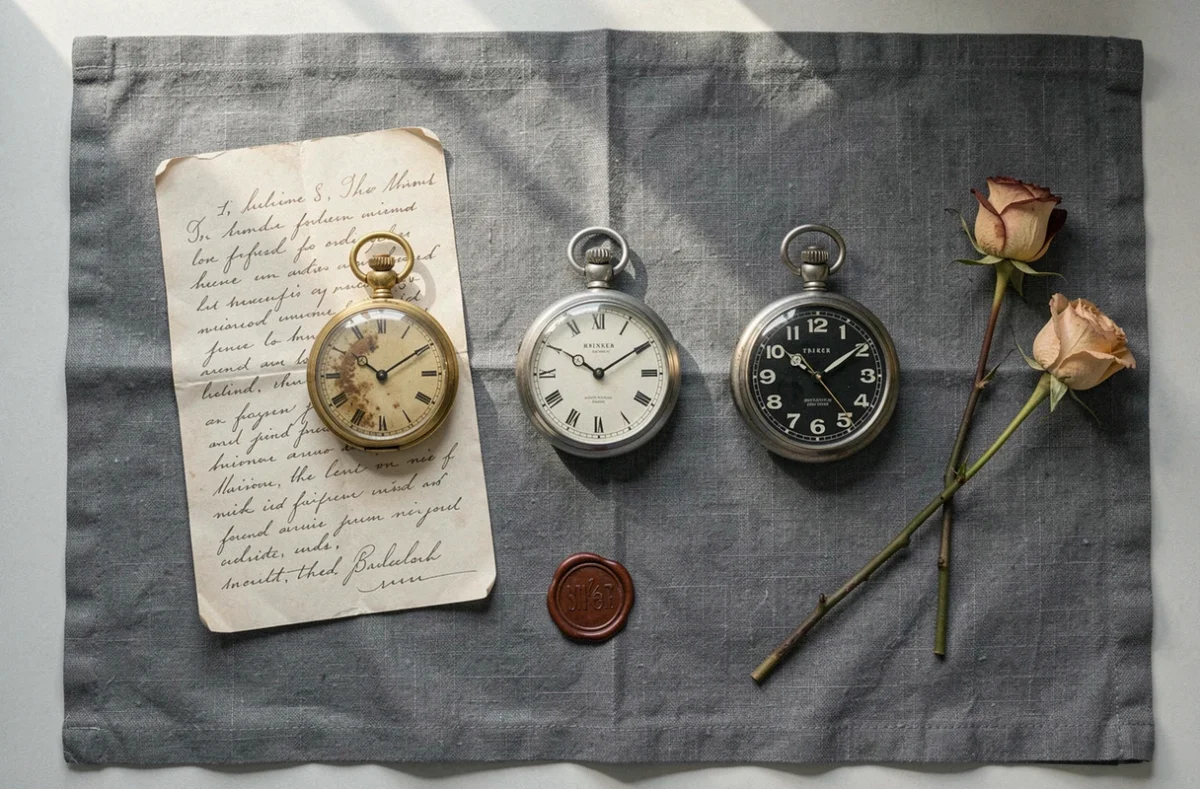
The chain is not just a safety cord. Historically, it constitutes the visible part of the pocket watch, the one that others notice first. Three styles of chains persist in contemporary use.
The Albert chain, with a T-bar, attaches to the waistcoat buttonhole. The double Albert chain adds a second strand, often finished with a pendant or a cigar cutter. The belt chain, more casual, hooks onto a belt loop and descends towards the trouser pocket.
The choice of metal (steel, brass, gold-plated) should match that of the case to avoid an visually unharmonious contrast. The coherence between chain and case defines the elegance of the whole, more than the price of each element taken separately.
The tradition of the pocket watch does not rely on a cyclical fashion effect. It is based on an object whose visible mechanics, the act of opening, and the aging material create a relationship with time that the digital cannot replicate. The most reliable purchase criterion remains the physical verification of the movement and dial by a watchmaker, before any aesthetic consideration.