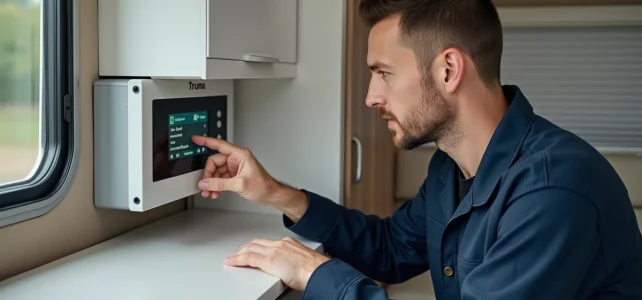
You are at a motorhome area, night is falling, and your Truma CP Plus panel displays a code you have never seen before. The heating refuses to start. Before panicking or calling a repairman, understanding what the Truma CP Plus error codes mean often allows you to restore functionality in just a few minutes.
Connected IoT Monitoring with the Truma CP Plus Panel: Anticipate Rather Than Suffer
Most guides simply list the codes and their associated solutions. Have you ever noticed that certain breakdowns always occur at the same time, during extreme cold or after a long parking period? This is where IoT monitoring makes sense.
Recommended read : Understanding the prison canteen: operation, budget, and tips for effective management
Smart home devices compatible with the Truma iNet protocol allow you to monitor battery voltage, gas pressure, and ambient temperature in real-time. In practice, you receive an alert on your phone before the error code appears on the panel.
For digital nomads living year-round in their vehicles, this anticipation changes the game. A slow voltage drop, for example, triggers an E1xx code on the CP Plus. If your IoT sensor alerts you that the voltage is dropping below the critical threshold, you can plug in the charger or start the engine before the heating locks up.
Related reading : Everything You Need to Know About the Automotive World: Tips, News, and Tricks for Your Car
This type of setup works with an iNet Box coupled with a smart home gateway (like Home Assistant or equivalent), and several users are already documenting their setups on specialized forums.
If you are looking to find the list of Truma CP Plus error codes with their associated solutions, combining it with connected monitoring will allow you to shift from reactive troubleshooting to preventive maintenance.
Truma Error Codes Related to Voltage and Gas Supply
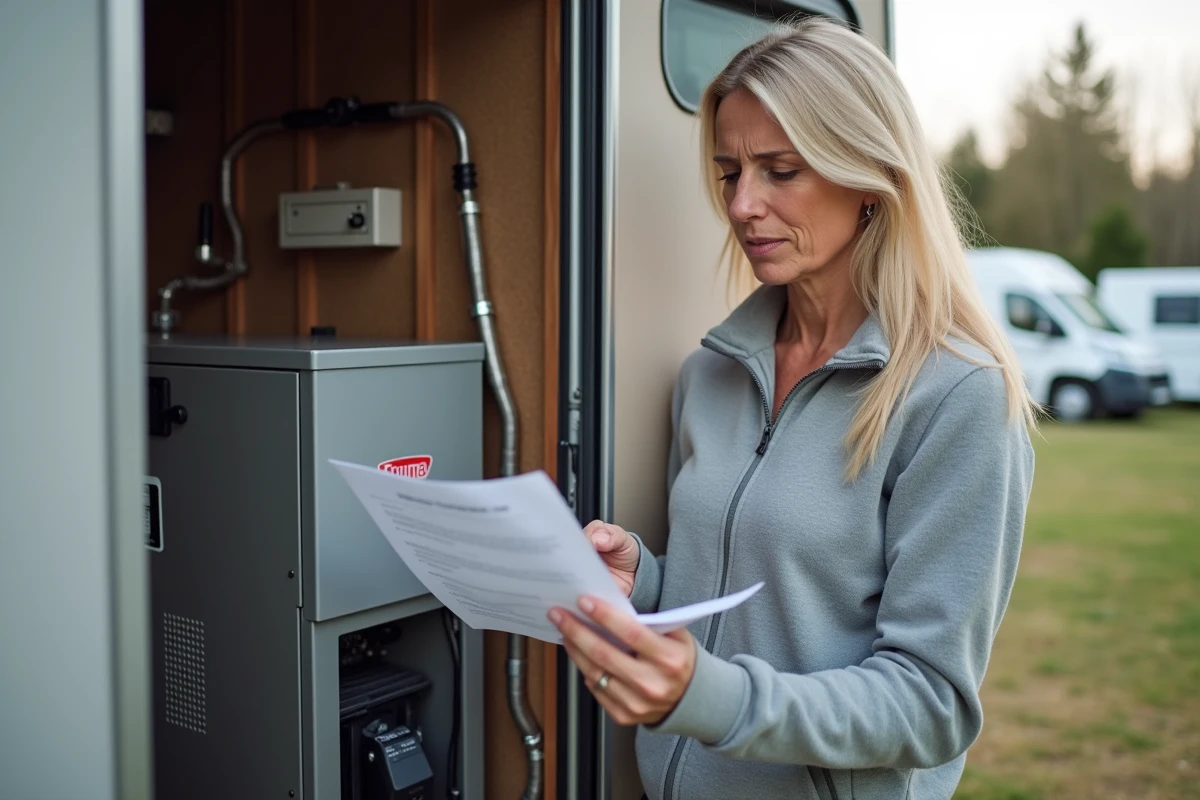
The majority of CP Plus failures stem from two main problem areas: electrical supply and gas supply. The panel then displays distinct codes that need to be differentiated.
Voltage Errors on the CP Plus Panel
When the battery voltage is low, the Truma system goes into safety mode. The displayed code indicates a voltage too low to power the fan or the electronic board. This is not a failure of the heating itself, but a lack of upstream energy.
The reflex is simple: check the voltage at the battery terminals with a multimeter. If it is below the nominal threshold, plugging into mains power or starting the vehicle resolves the issue without touching the Truma.
Gas and Combustion-Related Errors
Codes indicating a gas fault appear when the burner does not detect a flame after several ignition attempts. Before suspecting the Combi, check these points:
- Is the gas bottle open and does it still contain propane or butane? In cold weather, butane does not vaporize below zero degrees.
- Is the shut-off valve on the vehicle’s gas rail open? Some motorhomes have an additional valve under the floor.
- Is the exhaust chimney obstructed (insect nest, frost, leaves)? A blocked draft prevents ignition and triggers an error code after three attempts.
A nearly empty bottle produces the same symptoms as a gas failure. The residual flow is too low to maintain the flame, and the Combi shuts off for safety.
Sensor and Probe Errors on the Truma Heating System
The Truma Combi uses several sensors: an ambient temperature sensor (the one on the CP Plus panel), an overheating sensor in the heat exchanger, and a flame sensor. When one of these elements transmits an inconsistent value, the system displays a specific error code.
The ambient sensor is the most exposed. Generally placed in the control panel, it can be skewed by direct sunlight or heat from a nearby device. The displayed code then indicates an abnormal discrepancy between the requested temperature and the measured temperature.
Moving the CP Plus panel to a shaded area or away from a heat source is sometimes enough to make the code disappear. If the problem persists, the sensor itself may be faulty. Its replacement should be done by a certified Truma technician.
The overheating sensor triggers when the air around the heat exchanger is not circulating properly. Check that the air outlets are not obstructed by clothing or furniture. This is the most common cause of this type of code and the quickest solution.
Resetting the Truma CP Plus: When and How to Do It
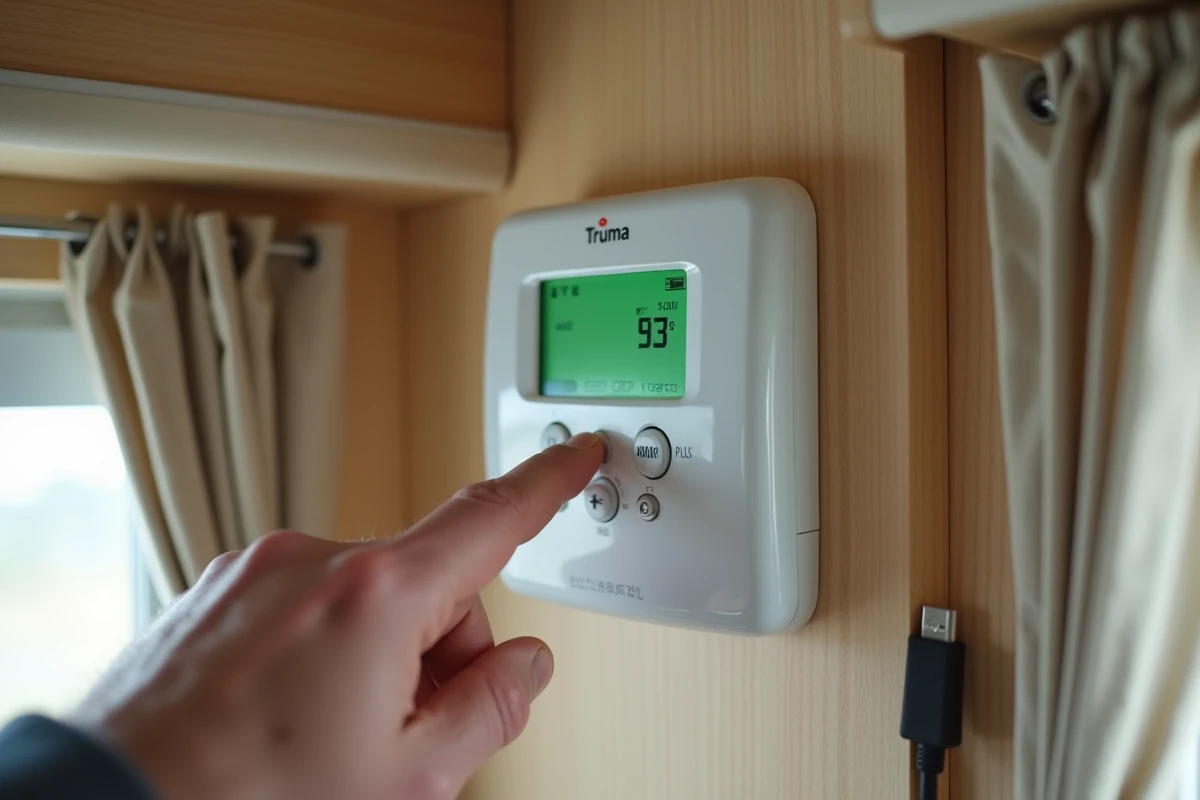
The reset is the first aid gesture in the face of a persistent error code. There are two levels on the CP Plus panel.
Simple Reset via the Rotary Panel
Press the rotary button on the CP Plus for a few seconds. The screen turns off and then restarts. This reset clears temporary errors (brief gas cut, micro power cut). If the original problem is resolved (bottle reopened, voltage restored), the heating resumes normally.
Complete Reset by Power Cut
If the simple reset does not work, cut the power supply to the Combi at the dedicated fuse. Wait one to two minutes, then restore the power. This procedure resets the electronic board and clears the error codes stored in the system.
When a code consistently reappears after a complete reset, the problem is hardware-related. Codes related to a faulty internal component (electronic board, gas solenoid valve, fan) require intervention from a certified technician with access to original Truma parts.
Three Diagnostic Errors to Avoid on a Truma Heater
Before replacing a part or calling a repairman, keep these common pitfalls in mind:
- Confusing a gas problem with an electrical problem. An ignition code may come from a weak battery that does not provide enough current to the gas solenoid valve, rather than a lack of gas.
- Ignoring the state of the exhaust chimney. On Combis installed under a bed or bench, access is inconvenient, but partial obstruction causes recurring codes.
- Continuously resetting without addressing the root cause eventually puts the Combi into complete lockout mode. The system interprets repeated attempts as a serious fault and locks the device.
The error codes of the Truma CP Plus follow a coherent logic: voltage, gas, sensor, internal component. By first identifying the family of the code, you eliminate most false leads and save valuable time, whether on a highway rest area or at the end of a country road.