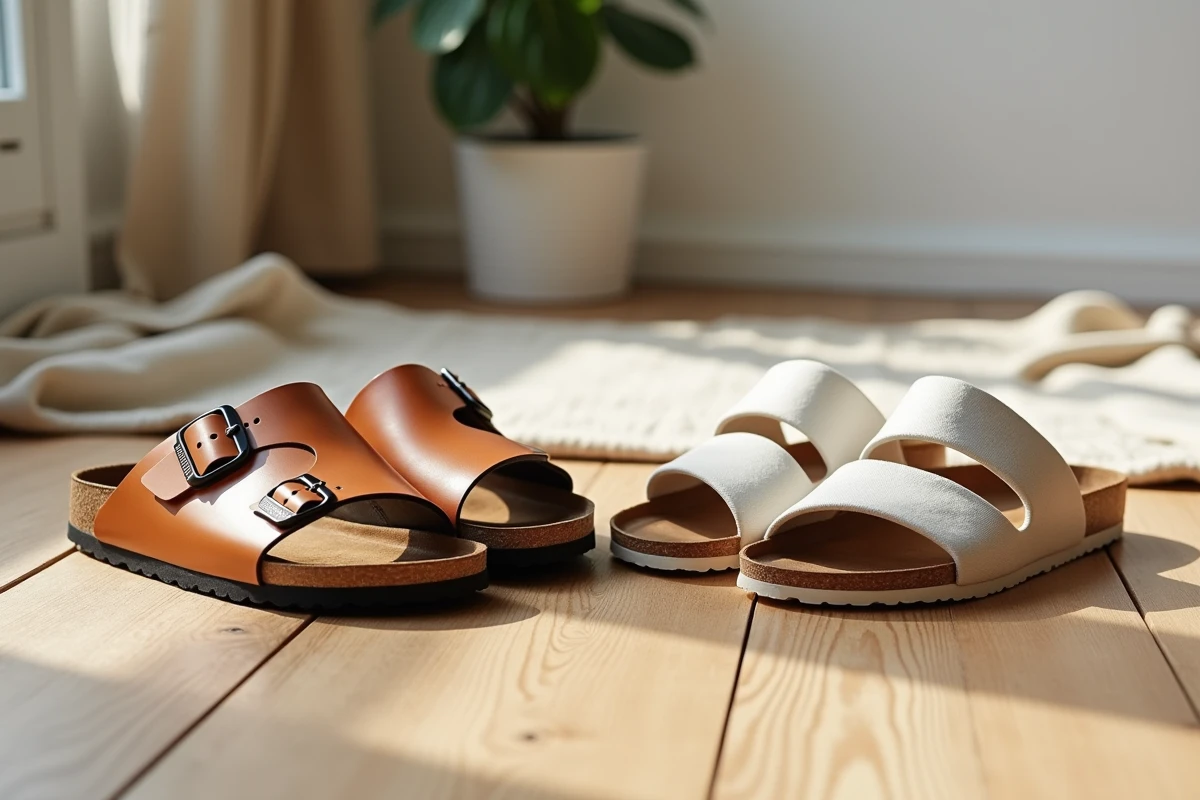
Bayton and Birkenstock both make sandals with anatomical soles, but their choices of materials, construction, and pricing result in shoes that age differently. Comparing these two brands requires looking beyond appearance to examine what happens underfoot, especially after several months of regular use.
Bayton and Birkenstock Anatomical Soles: Two Designs of Foot Support
The term anatomical sole covers different realities depending on the brand. Birkenstock uses a cork and natural latex sole, molded to gradually conform to the shape of the foot. This sole deepens over the weeks and ultimately creates a personalized imprint.
Bayton offers a sole made from synthetic materials that replicates the general shape of an ergonomic footbed. Comfort is immediate from the first try, with no break-in period. The compromise lies elsewhere: the synthetic sole retains its original shape longer but does not adapt to the individual foot’s morphology.
For those seeking a complete comparison of Bayton and Birkenstock that includes the podiatric dimension, this difference in material is the first criterion to consider before even looking at the models.

Wear After Two Seasons: What Cork and Synthetic Reveal
User feedback on social media and video platforms shows a recurring pattern after two seasons of daily use. On Birkenstock sandals, the cork sole can crack if not maintained (a coat of waterproofing balm once or twice a year is usually sufficient). The leather straps mark, develop a patina, but hold up.
Bayton sandals show their limits differently. The synthetic sole withstands water and sand well, making it a logical choice for beach use. The straps, often made from synthetic materials or reconstituted leather, may come unglued or deform sooner than their Birkenstock counterparts.
The observation is not binary. A Bayton worn three months a year on vacation will easily last several summers. A Birkenstock worn daily from April to October for two years requires a minimum of cork maintenance to remain functional.
Sensitive and Painful Feet: What Support for Which Profile
Podiatry-oriented content, especially on TikTok, regularly places Birkenstock among the recommended sandals for problematic feet. The reason lies in the marked arch of the cork sole, which progressively supports the arch of the foot.
Bayton offers a flatter support, less pronounced under the arch. For a foot without any particular pathology, the difference is minimal. For a high-arched foot, plantar fasciitis, or chronic heel pain, the level of support makes a significant difference.
- Flat or neutral foot without pain: both brands are suitable, with Bayton offering good comfort at a lower cost
- High-arched foot: the Birkenstock cork sole, which deepens over time, better conforms to the morphology
- Bunion or claw toe: the width of the Birkenstock fit (regular or narrow cut) allows for a better fit than most Bayton models
- Post-operative use or podiatric prescription: check with a professional, no off-the-shelf sandal replaces a custom orthotic
A often overlooked point: Birkenstock offers two widths on most of its models. Bayton generally offers only one width. For wide or narrow feet, this option makes a real difference in daily support.
The Trap of Immediate Comfort
Bayton often appeals at the fitting in-store because the sole is soft from the start. Birkenstock may seem rigid, almost hard, during the first few days. The Birkenstock cork requires about two weeks of break-in before reaching its optimal comfort. Giving up too soon is like judging a mattress on the first night.
Price and Positioning: Where the Budget Difference Lies
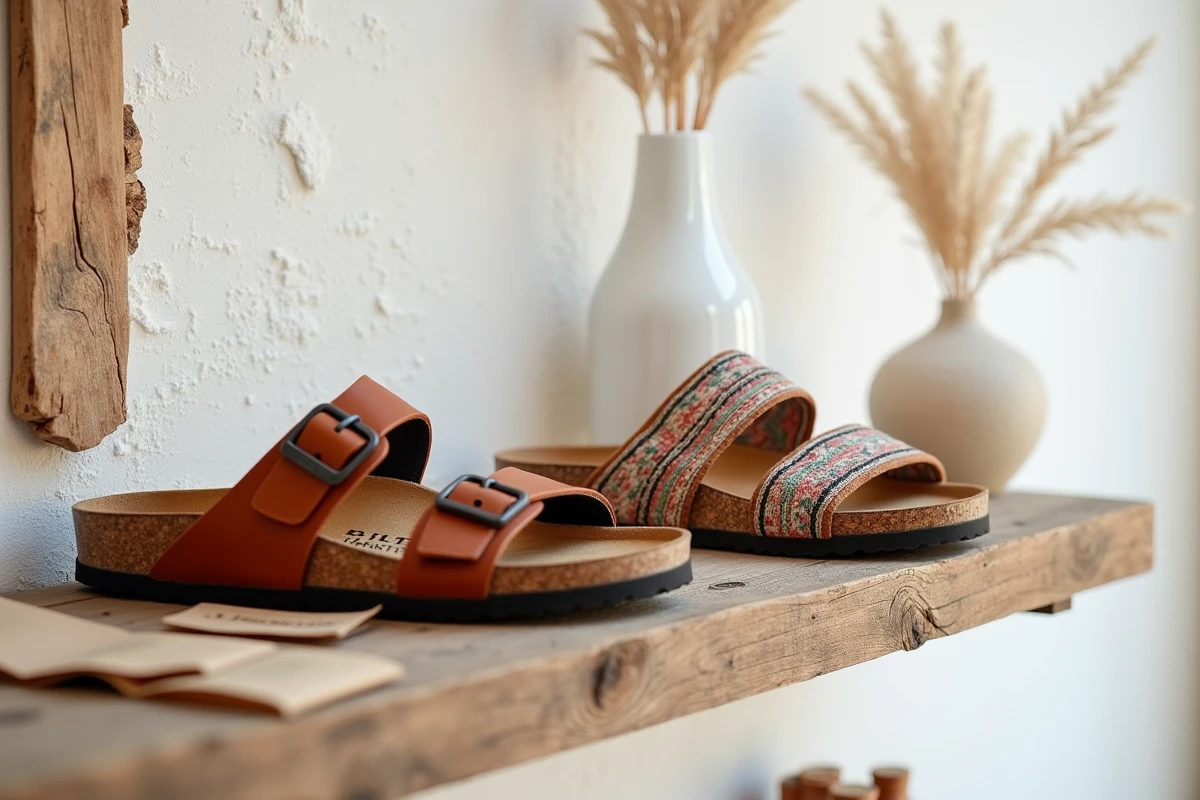
Birkenstock is clearly positioned above Bayton in terms of pricing. Bayton explicitly targets buyers who want a similarly styled sandal without the price tag associated with the German brand.
- Bayton uses synthetic materials or reconstituted leather, which reduces production costs
- Birkenstock is made with cork, natural latex, and full-grain leather in its main lines
- The cost per season of use tends to converge if the Birkenstock lasts significantly longer, which depends on maintenance and frequency of wear
Recent buying guides also broaden the comparison by placing Bayton alongside other accessible brands like Billowy, which is more focused on beach use. Bayton occupies a more urban niche in this price range, which explains its frequent association with Birkenstock in searches.
Choosing Between Bayton and Birkenstock Based on Actual Use
The choice rarely boils down to “better” or “worse.” A Bayton purchased for a summer of festivals or vacations fulfills its role without issue. A Birkenstock bought as an everyday sandal over several years justifies its higher cost through the durability of the cork and the gradual adaptation to the foot.
For sensitive or painful feet, the arch support and width choice clearly lean towards Birkenstock. For a tight budget or occasional use, Bayton offers a fair compromise, provided one does not expect the same longevity. The last parameter to check remains the width of the foot: if neither of the two Birkenstock cuts fits, the debate is settled in advance.