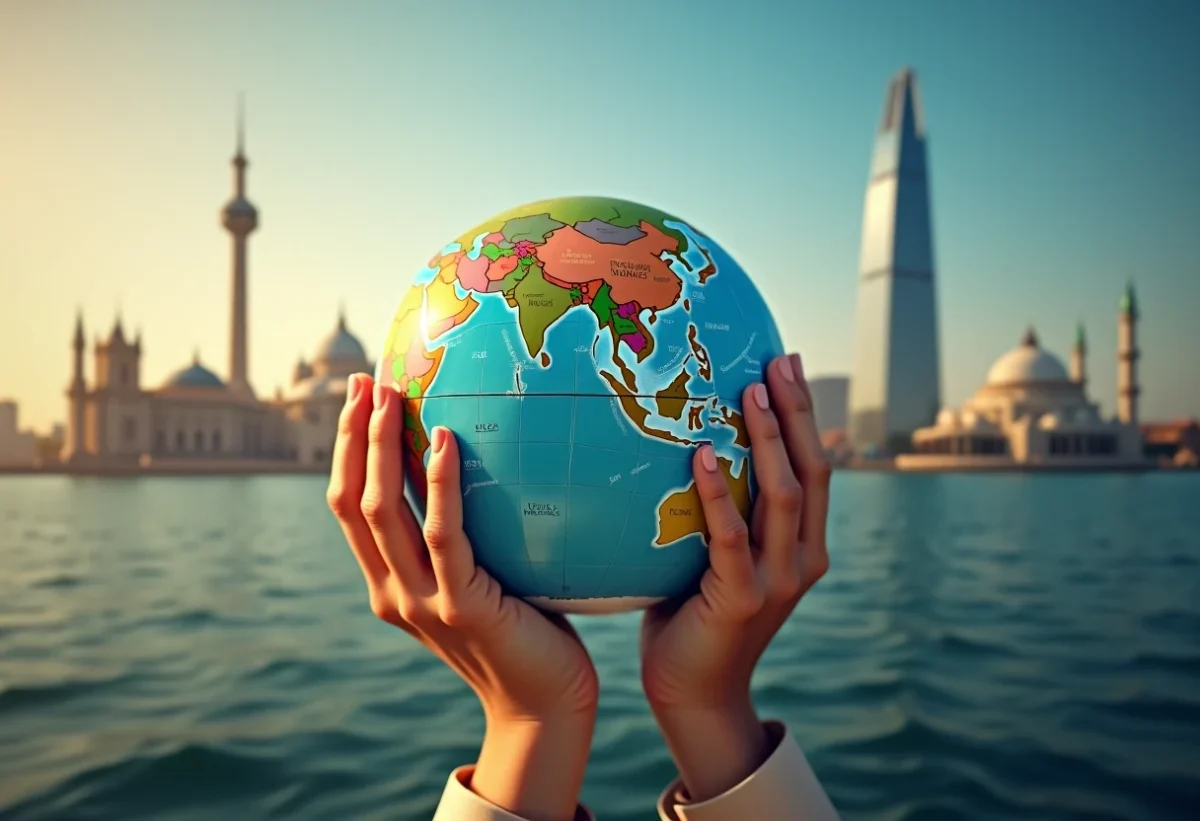
Traveling abroad can be disorienting in many ways, one of which is the conversion of distances. The habit of measuring journeys in kilometers suddenly encounters miles, feet, or nautical miles. Each measurement system tells a cultural and historical story unique to the country visited.
This technical complexity can become a source of fascination. Calculating the number of nautical miles between two ports or converting kilometers to land miles for a hike allows for an additional immersion into local daily life. Seasoned travelers see this as an opportunity to better understand the customs and mentality of the local population.
The origins and evolution of measurement units in international travel
The origin of measurement units such as the mile and the kilometer is rooted in distinct historical and cultural traditions. The mile, primarily used in the United States and the United Kingdom, is part of the imperial system. This system, dating back to the British colonial era, relies on ancient measurements like the foot and the pound. In contrast, the kilometer belongs to the metric system, created during the French Revolution to unify and simplify measurements.
The two systems coexist, each having its own specifics and followers. Converting distances between these systems requires rigorous precision, especially for travelers and scientists. This conversion is often summarized by the formula: 1 mile 1 kilometer.
- United States: Uses the mile for road distances.
- United Kingdom: The mile is still in use for certain contexts, although the country is partially converted to the metric system.
- Rest of the world: The kilometer predominates.
The differences between the imperial system and the metric system influence international mobility. Travelers frequently need to convert distances to plan their routes accurately. For example, during the Western State 100-Mile Endurance Run, participants measure their performances in miles. In contrast, the Ultra-Trail du Mont-Blanc uses kilometers.
The evolution towards a unified measurement system remains an open debate. The metric system, adopted by the majority of countries, facilitates international exchanges and travel, but imperial traditions persist. Consider these nuances during your travels for a better understanding of the distances covered.
Modern tools for converting distances and their impact on travelers
The digital age has simplified distance conversion for travelers. Dedicated apps and websites allow for instant conversion of miles to kilometers and vice versa. These tools provide essential accuracy for those planning international trips.
- Google Maps: Integrates an automatic distance conversion function according to the measurement system of the country.
- Online converters: Offer quick and accurate calculations for distances.
- Dedicated apps: Available on smartphones, these apps facilitate real-time conversion.
For scientists, digital tools ensure the necessary rigor in calculations. The mile-kilometer conversion is fundamental for disciplines such as geography and astronomy. Researchers use specialized software that incorporates this conversion into their algorithms to avoid any measurement errors.
The use of these digital tools transforms the travel experience. Planning becomes smoother, and misunderstandings related to differences in measurement systems are minimized. For example, a road trip in the United States requires converting distances to miles, while a journey in Europe will necessitate switching to kilometers.
The Western State 100-Mile Endurance Run and the Ultra-Trail du Mont-Blanc illustrate this duality. Participants must adapt their preparations and performances to local measurement units. Consequently, digital tools become indispensable allies for navigating between these worlds of measurements.