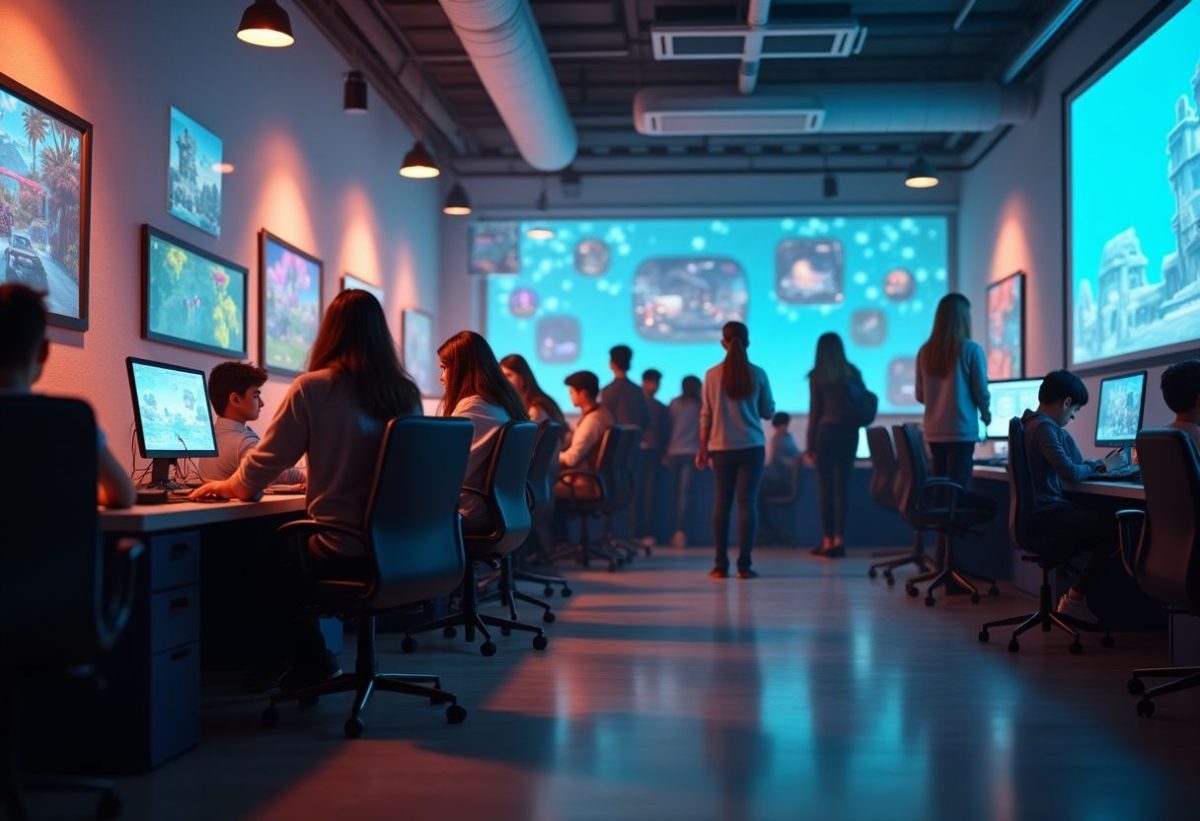
In a world where technology evolves at a breakneck speed, the video game industry is experiencing exponential growth, attracting the attention of many people looking to make it their career. This dynamic industry, with its infinite possibilities for creation and innovation, is fueled by passionate professionals who master the art of bringing virtual worlds to life. Video game schools play a central role in this dynamic, training the next generation of creators, developers, and designers. Far from being merely places of learning, these institutions are transforming into talent incubators where students acquire advanced technical skills and develop a deep understanding of the various aspects of the industry.
This phenomenon reflects a radical shift in the perception of video games, moving from simple entertainment to complex and interactive works of art capable of telling captivating stories and transporting players into fantastic universes.
The Rise of Specialized Training
The enthusiasm for video games continues to grow, and specialized training perfectly meets this expanding demand. These programs offer a variety of curricula tailored to the needs of the market and the expectations of students.
- Diverse Programs: The curricula offered by video game schools vary, ranging from programming to graphic design, including game design and scripting. This diversity allows students to choose a path that aligns with their professional aspirations.
- Hands-on Training: Students benefit from practical and immersive training. Workshops and team projects prepare them to work in a professional environment.
- Industry Professionals as Instructors: Active professionals share their experiences and expertise, providing valuable insights into the sector’s demands.
- Partnerships with the Industry: Schools collaborate with renowned companies, offering students internship and job opportunities right after their training.
Key Skills Developed
Joining a video game school allows students to develop a set of essential skills, not only to succeed in the video game industry but also to thrive in the professional world in general.
First and foremost, creativity is at the heart of these programs. Students are encouraged to push beyond conventional boundaries to propose original and innovative concepts.
They also learn to master cutting-edge technological tools, such as game engines and graphic design software, which are indispensable for creating modern games.
Moreover, teamwork is a crucial skill that students develop throughout their curriculum, enhancing their ability to collaborate effectively on multidisciplinary projects.
Finally, project management is another key aspect, enabling future professionals to successfully carry out complex projects from their initial conception to final realization.
Career Opportunities
Graduates from video game schools find numerous professional opportunities in various sectors. The ever-evolving video game industry offers a wide range of exciting careers.
- Game Developer: This role involves programming and developing game mechanics using programming languages and game engines.
- Game Designer: Designers envision and plan the gaming experience, working on the story, characters, and levels.
- 3D Artist: Artists create the visuals of the game, modeling characters and environments in three dimensions.
- Game Tester: This crucial position involves identifying and fixing bugs to ensure a smooth user experience.
Challenges and Future Perspectives
Although promising, the field of video games is not without its challenges. Schools must constantly adapt to technological innovations and the changing expectations of the market.
Financing education remains an obstacle for some students, although scholarships and financial aid are often available.
Additionally, competition is fierce, and it is imperative for graduates to stand out through their skills and creativity. Despite these challenges, the future prospects are exciting.
The rise of technologies such as virtual and augmented reality opens new avenues for the industry, and schools are adapting their programs to include these innovations.
In the digital age, video games continue to establish themselves as a major artistic medium, combining technology and storytelling to offer unique immersive experiences.