A 15-minute safety meeting, slides projected in an overheated room, employees tuning out after three minutes. Most health and safety professionals know this scenario. Workplace prevention is more effective when it moves beyond a top-down format and engages teams on the ground, drawing on their own experience of the work.
Bring real risks to light with a participatory workshop
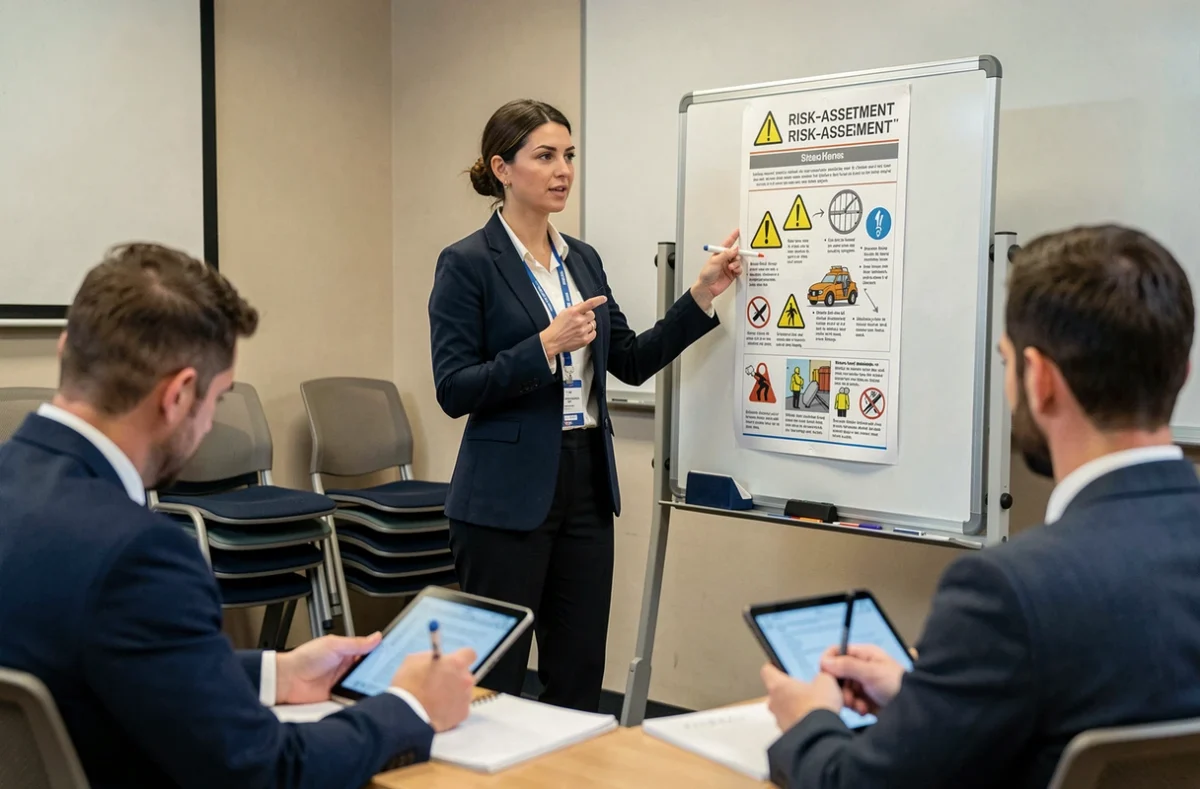
Competitors talk a lot about gamification and team building. Less often do they discuss the true potential of a fun workshop: bringing to light risks that no one has yet formally identified. A role-playing game, a photo walk around the workshop or a safety escape room does more than communicate instructions. These activities put employees in the role of active observers of their own working environment.
INRS emphasizes that risk assessments should be based on an analysis of actual work and involve employees, who understand the challenges they face in their day-to-day activities. A well-designed, engaging workshop puts this principle into practice. Instead of presenting a list of typical hazards, it asks participants to identify problematic situations themselves.
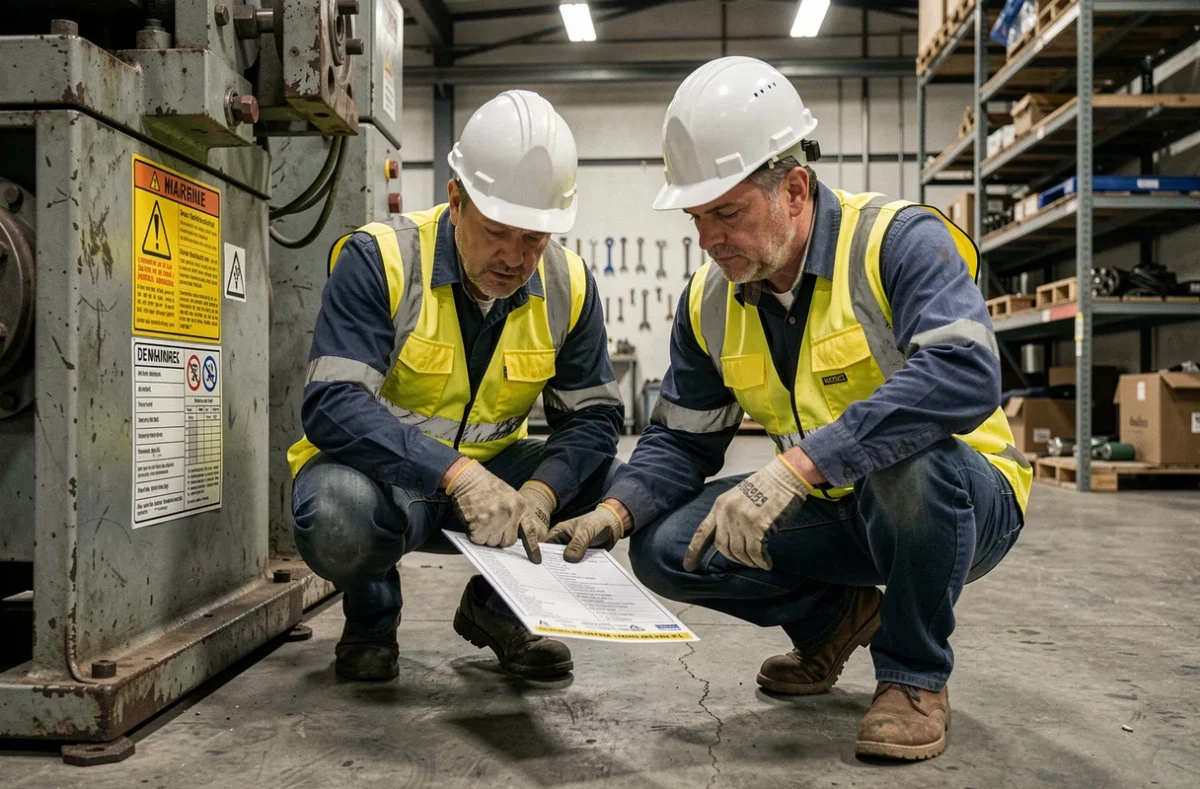
Have you ever noticed an operator bypassing a procedure because it slows down their pace? This kind of practice, rarely reported on a form, comes to light naturally during a group activity where everyone describes their own experience. Several companies use the INRS risk hunt via Synergi INRS to structure this process around concrete visual scenarios tailored to different industries.
From game to risk assessment document: turning observations into preventive action
A fun workshop that leads to nothing concrete is an enjoyable activity, not a prevention initiative. The difference lies in what happens after the game.
The DUERP (single document for the assessment of occupational risks) must list risks by work unit. Every observation made during a workshop should feed into this document. For companies with 50 or more employees, preventive measures are set out in an annual program (PAPRIPACT). Below this threshold, an action plan is recorded directly in the DUERP.
Here’s how to connect a safety awareness game to the formal prevention cycle:
- During the workshop, a designated person records each risk identified by participants, along with the location, the work situation involved and the frequency estimated by the team.
- In the days that follow, these observations are compared with the existing DUERP to identify risks that are missing or underestimated.
- Corrective actions are added to the annual prevention program (or to the action plan for smaller organizations), with an assigned owner and deadline.
- Participants receive feedback to show that their observations have led to visible changes.
Without this feedback loop, employee engagement fades. They see the workshop as a communications exercise, not as a way to make real improvements to their workplace safety.
Psychosocial risks in game scenarios: an often-overlooked angle
Most prevention games focus on physical risks: falls, manual handling and the use of personal protective equipment. Yet the DUERP covers all occupational risks, including psychosocial risks.
Including scenarios related to work organization broadens the scope of a workshop. A scenario might involve an excessive workload on a Friday afternoon, a disagreement between two departments over priorities, or an employee feeling isolated while working remotely. Psychosocial risks are easier to identify through group discussion than through an individual questionnaire.
Why is this angle so rarely explored? Because it requires more skilled facilitation. Discussing stress or interpersonal tensions in a fun setting means creating a supportive environment and training the facilitator to pick up on warning signs without exposing individuals. The game then becomes a structured space for discussion, not just a points-based quiz.
Build a credible psychosocial scenario
A good scenario starts with an observable work situation, not a theoretical definition. For example: “The team receives an urgent order at 4 p.m. The manager is away, and two people are on leave. What do you do?” Participants discuss the decisions involved, potential tensions and available resources. The health and safety professional notes any organizational risk indicators that emerge.
Practical criteria for assessing the effectiveness of a fun prevention workshop
A successful workshop is not measured by immediate satisfaction ratings. The real indicator is the number of new risks added to the DUERP after the exercise. Here are the criteria that distinguish a useful format from a one-off activity:
- Participants identified at least one risk that was not included in the existing single document.
- The observations gathered led to formalized corrective actions, with an owner and a deadline.
- The format covered several categories of risk (physical, chemical, psychosocial and ergonomic), not just visible hazards.
- Teams were involved in monitoring the measures taken, creating continuity between awareness-raising and the overall prevention process.
If a workshop meets all four criteria, it goes beyond being a one-off activity. It becomes part of the occupational health and safety cycle, with documented evidence and verifiable results.
Fun prevention is only valuable if it leads to decisions. A game that entertains without changing anything in the DUERP is a cost. A game that brings three hidden risks to light and triggers three corrective actions is a worthwhile investment in employee protection.